Description
About the watch
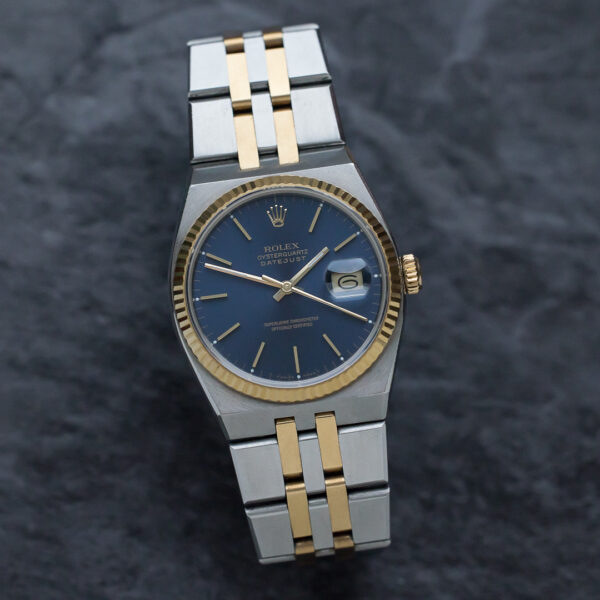
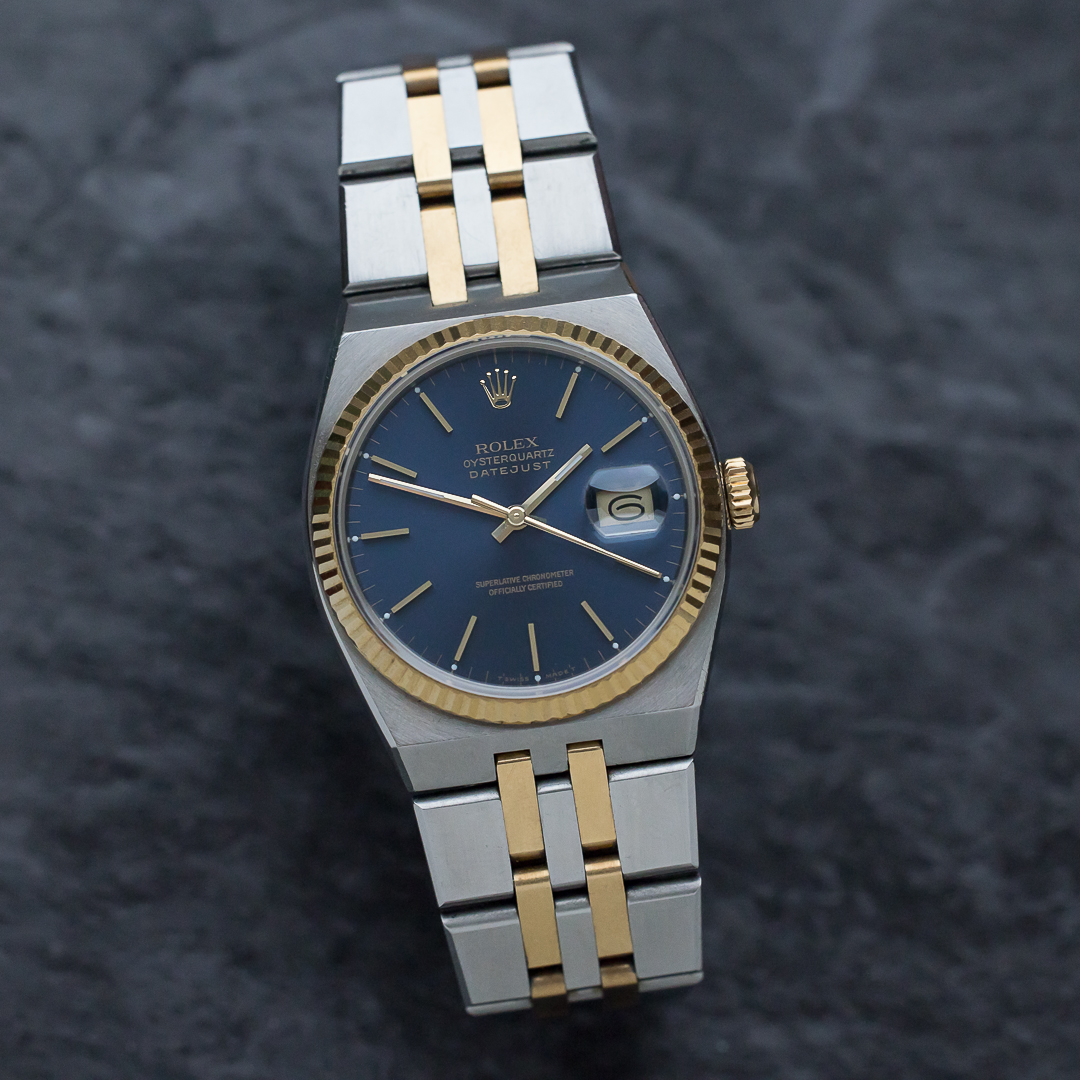
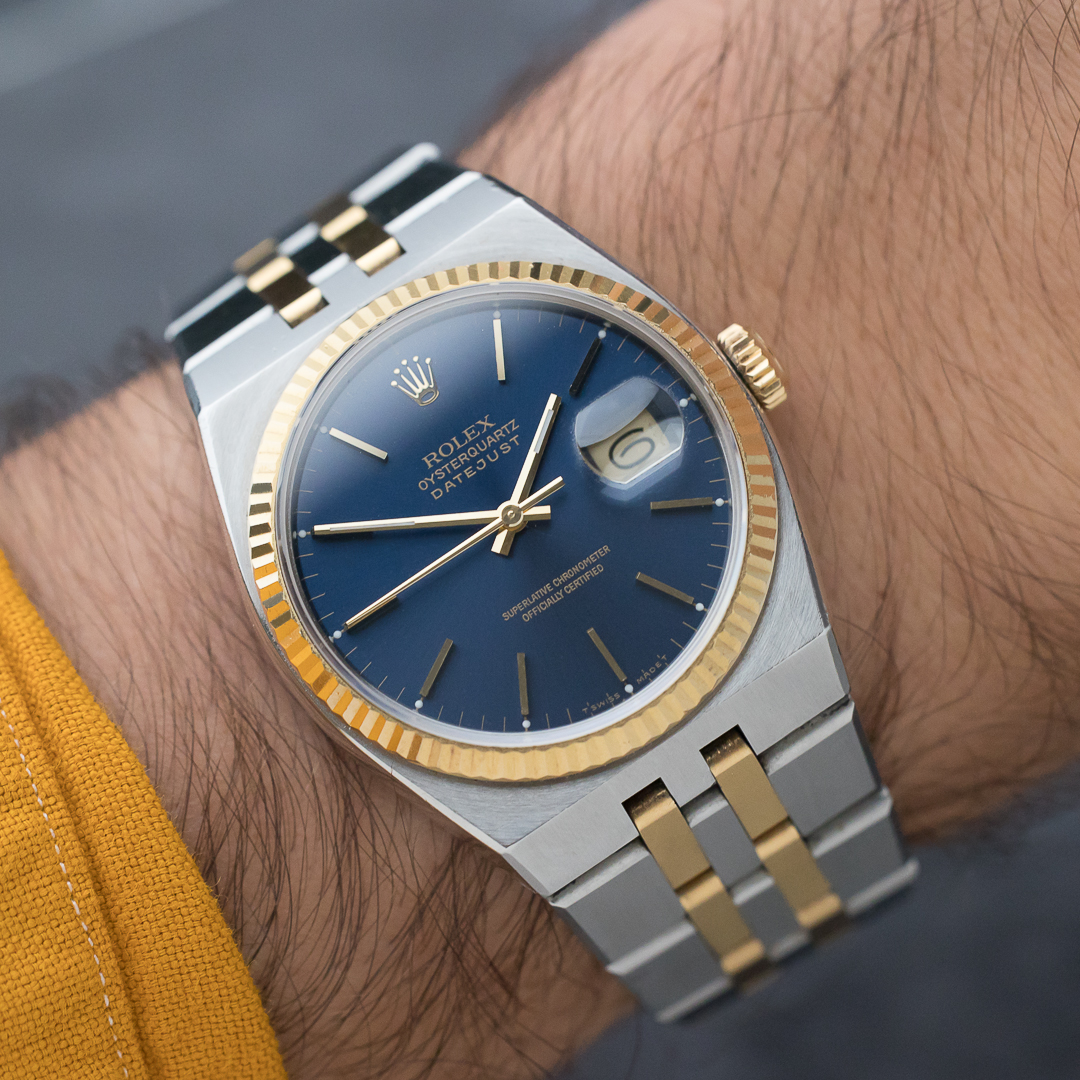
The Oysterquartz Datejust was issued in three distinct versions: the fully stainless steel ref. 17000, the steel with white gold bezel, ref. 17014, and the two-tone yellow gold and steel, the ref. 17013.
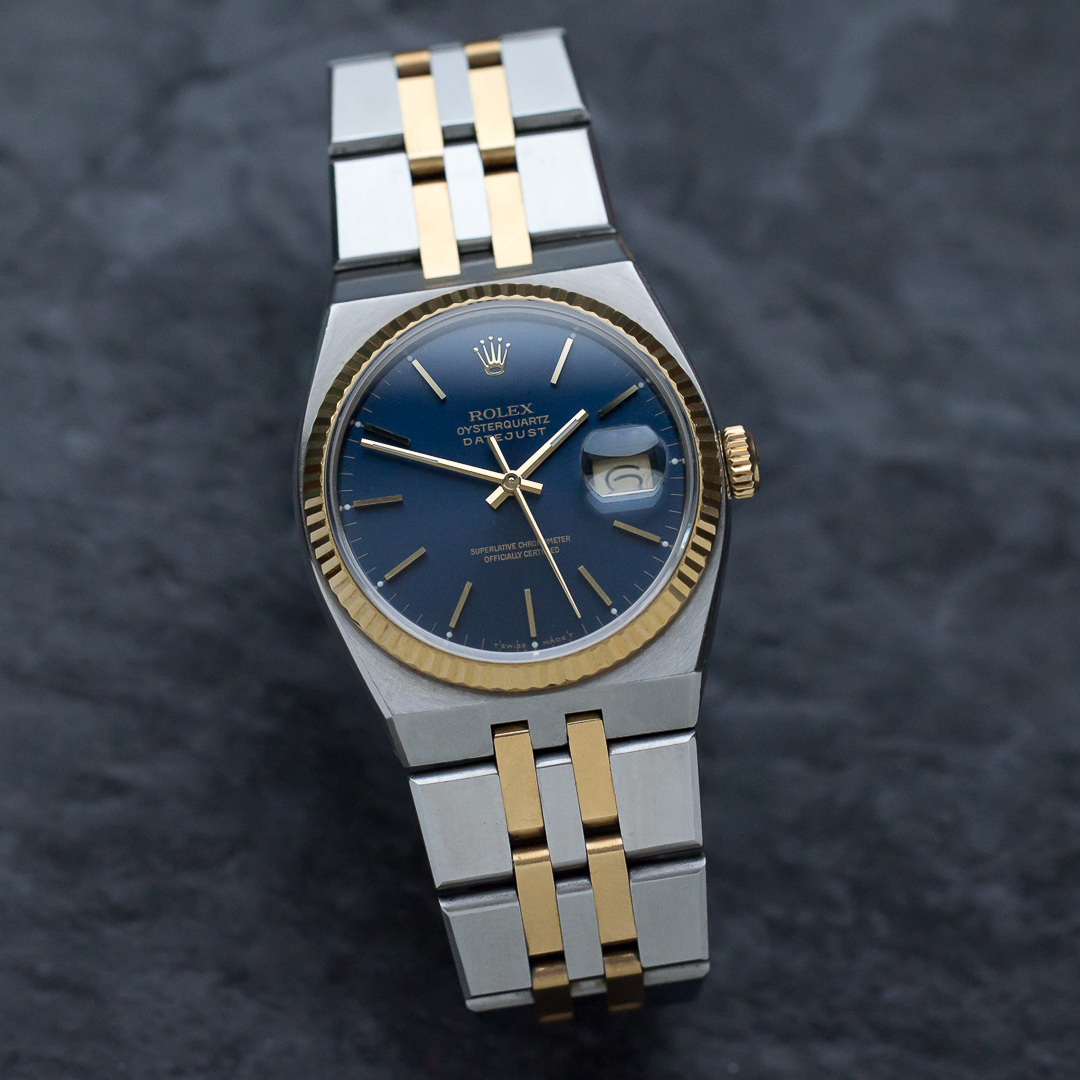
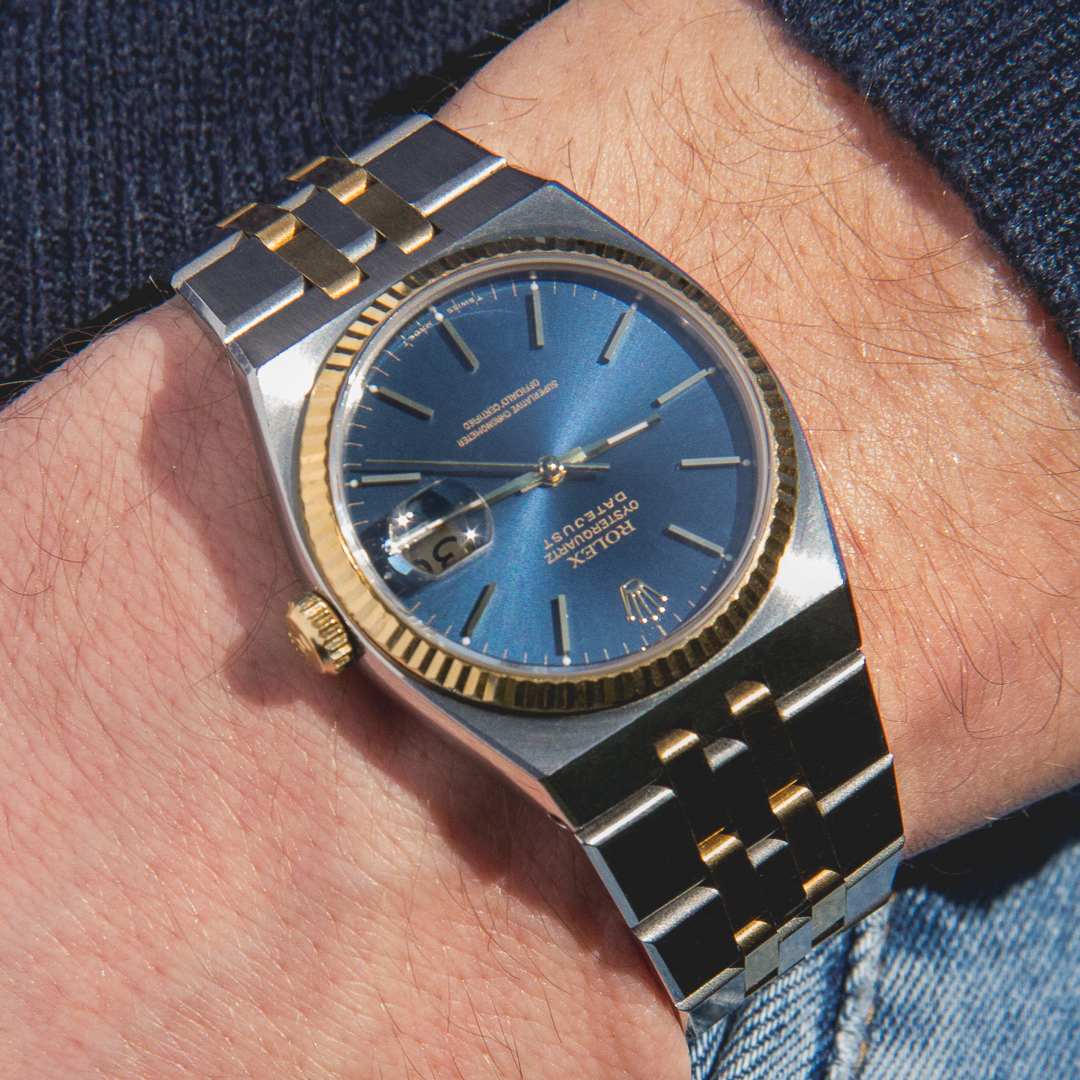
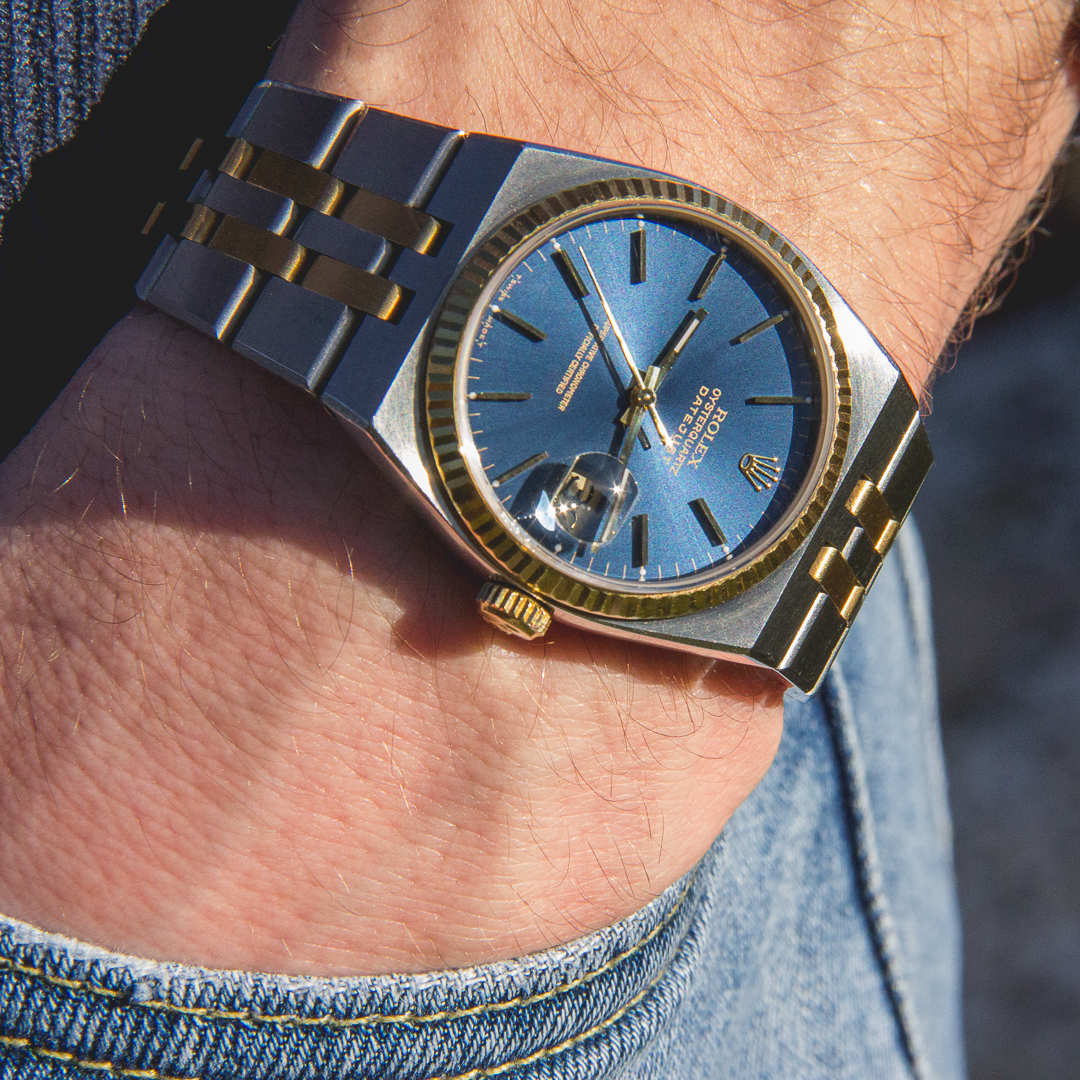
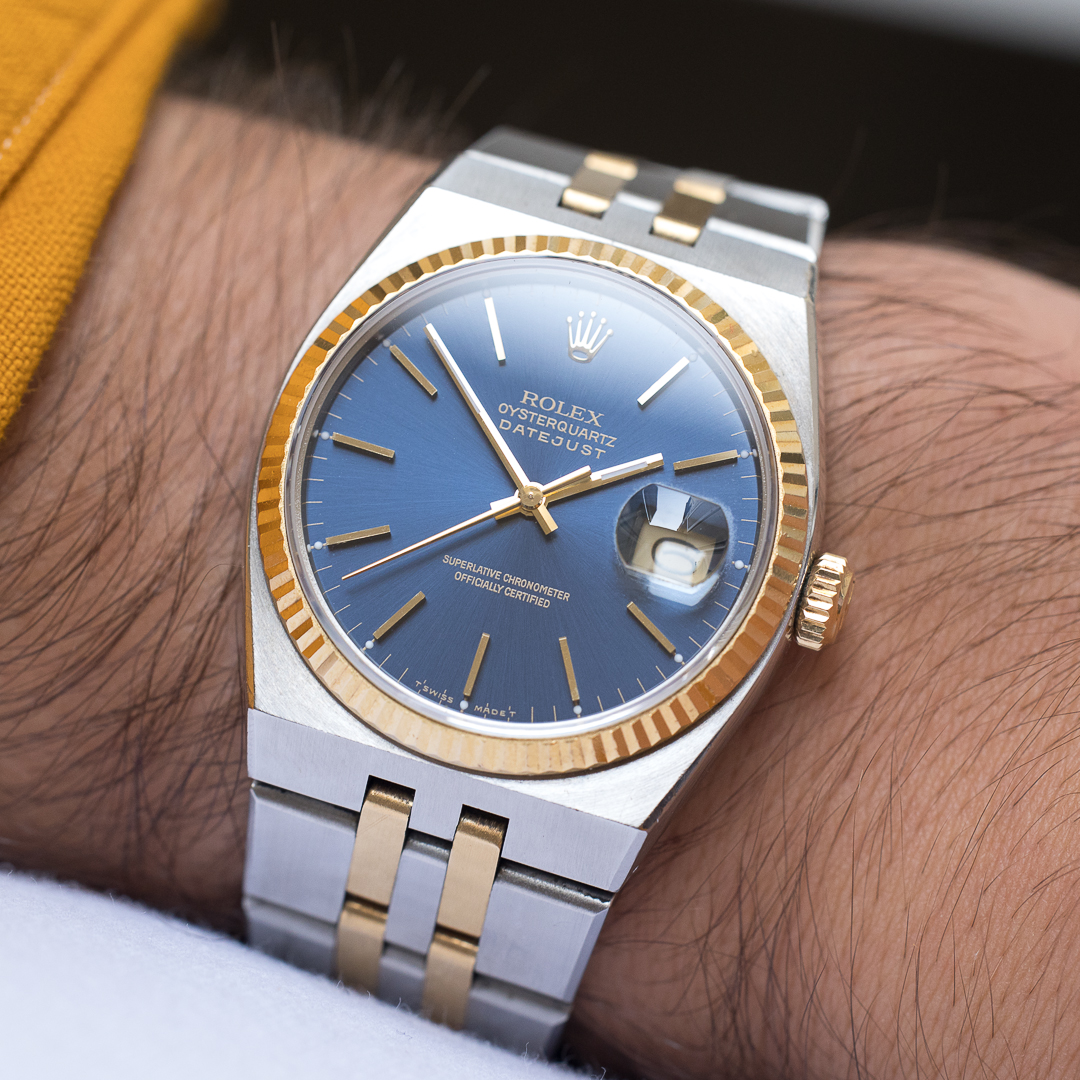
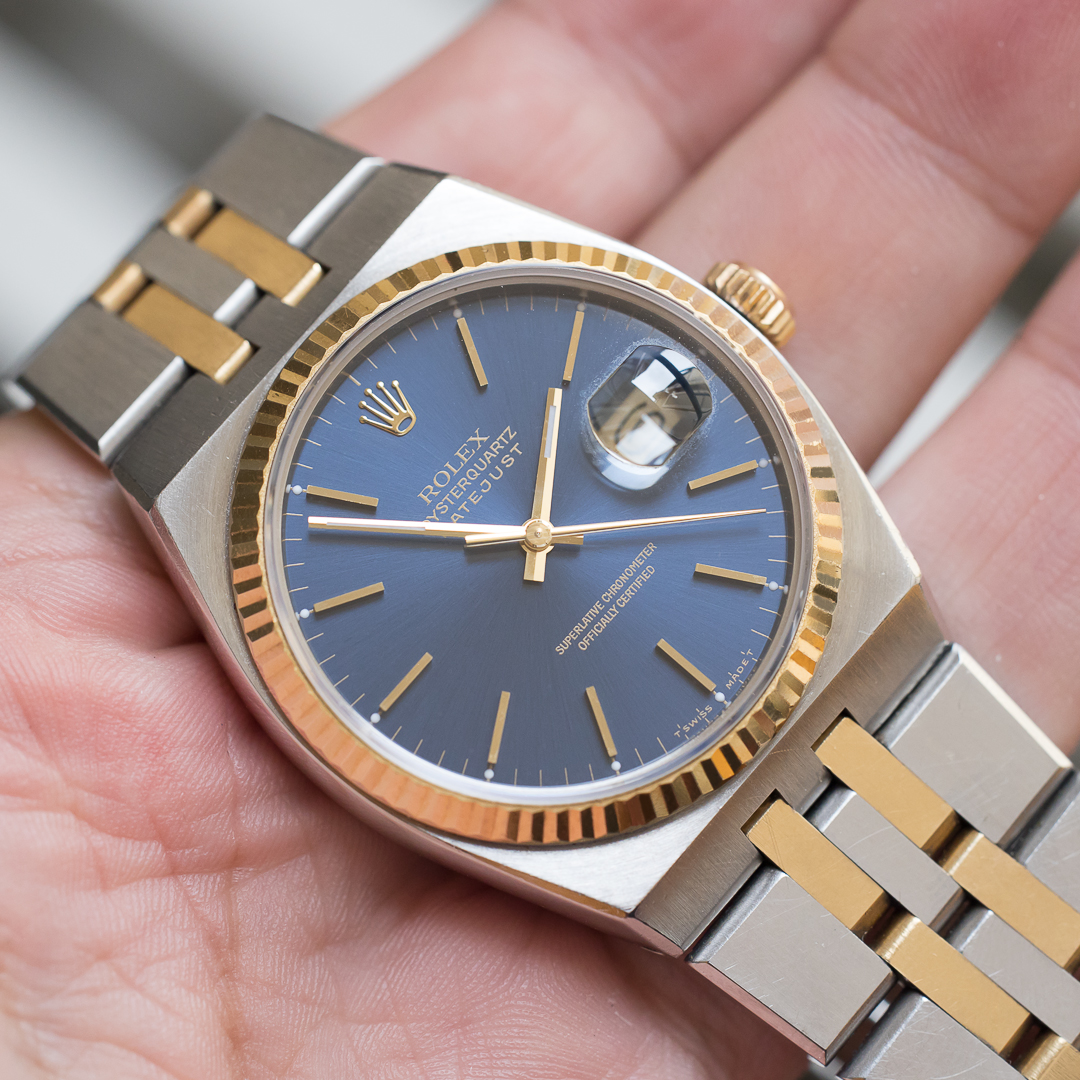
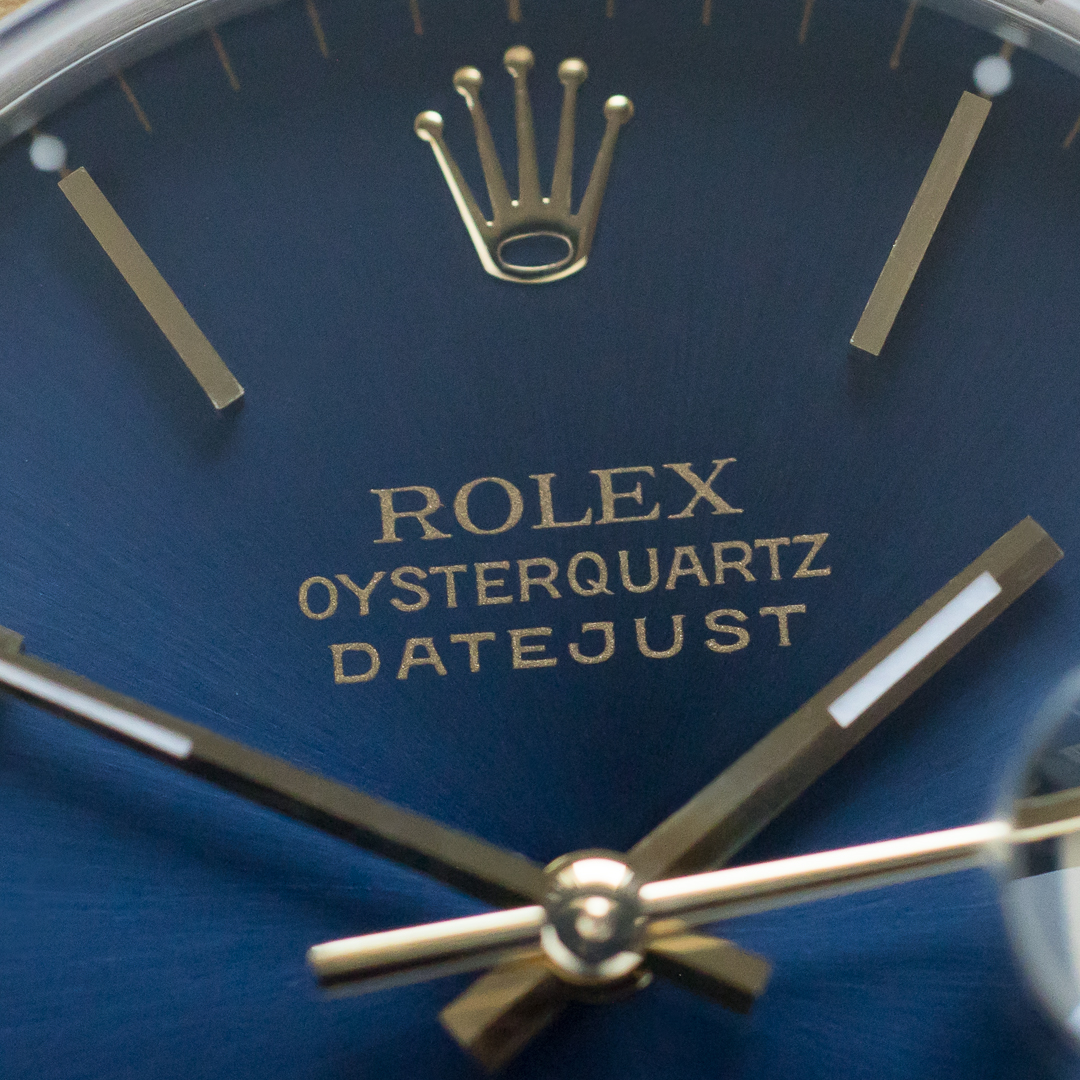
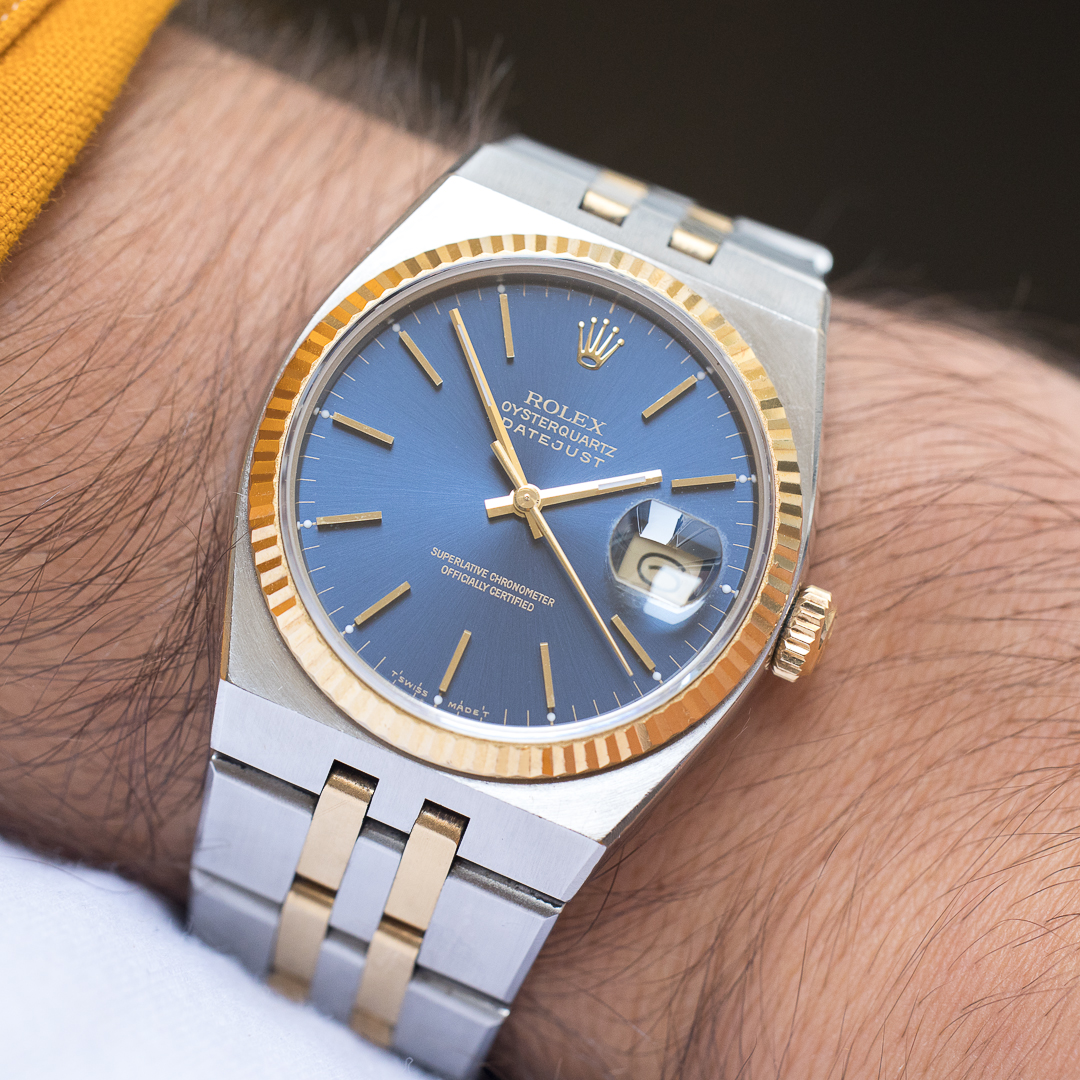
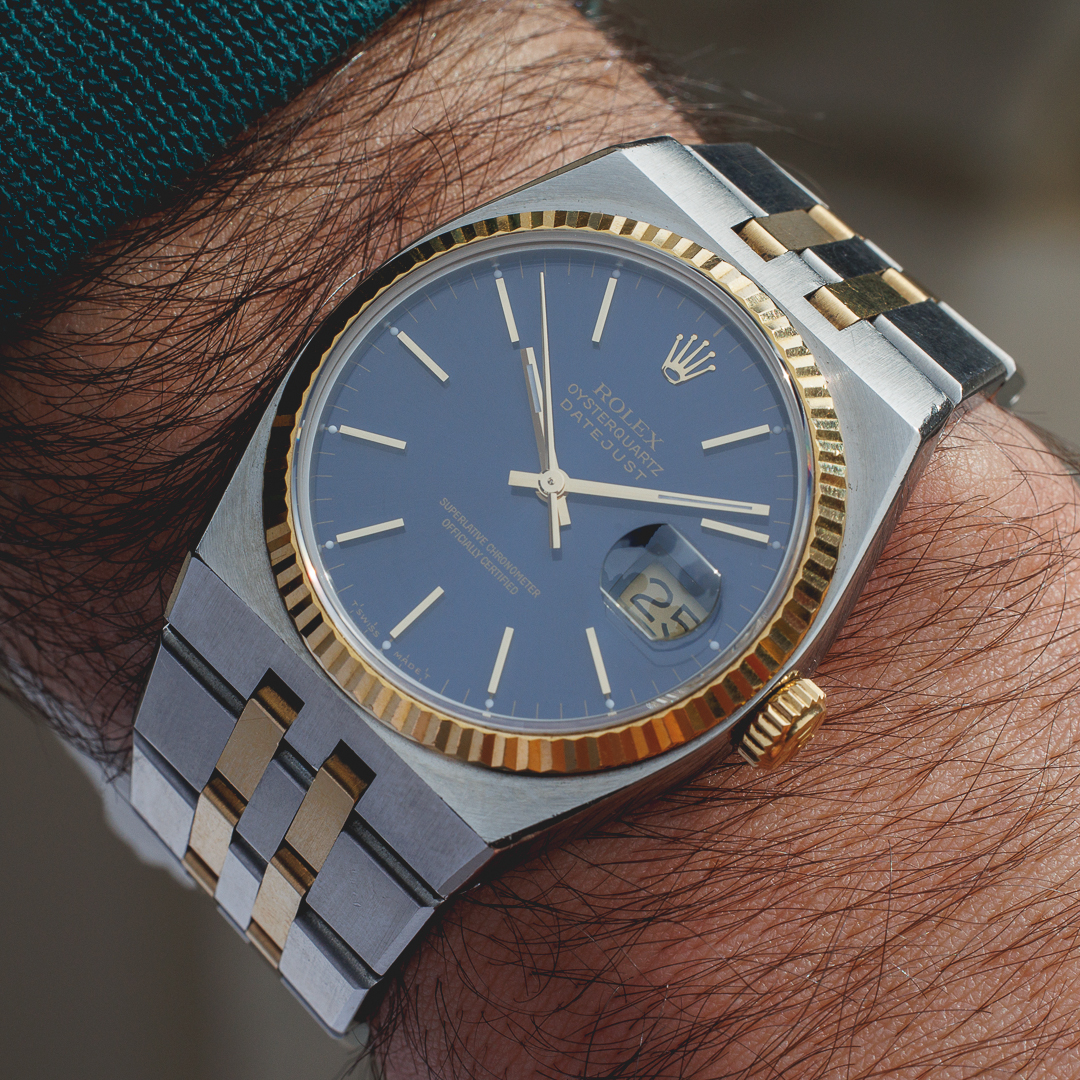
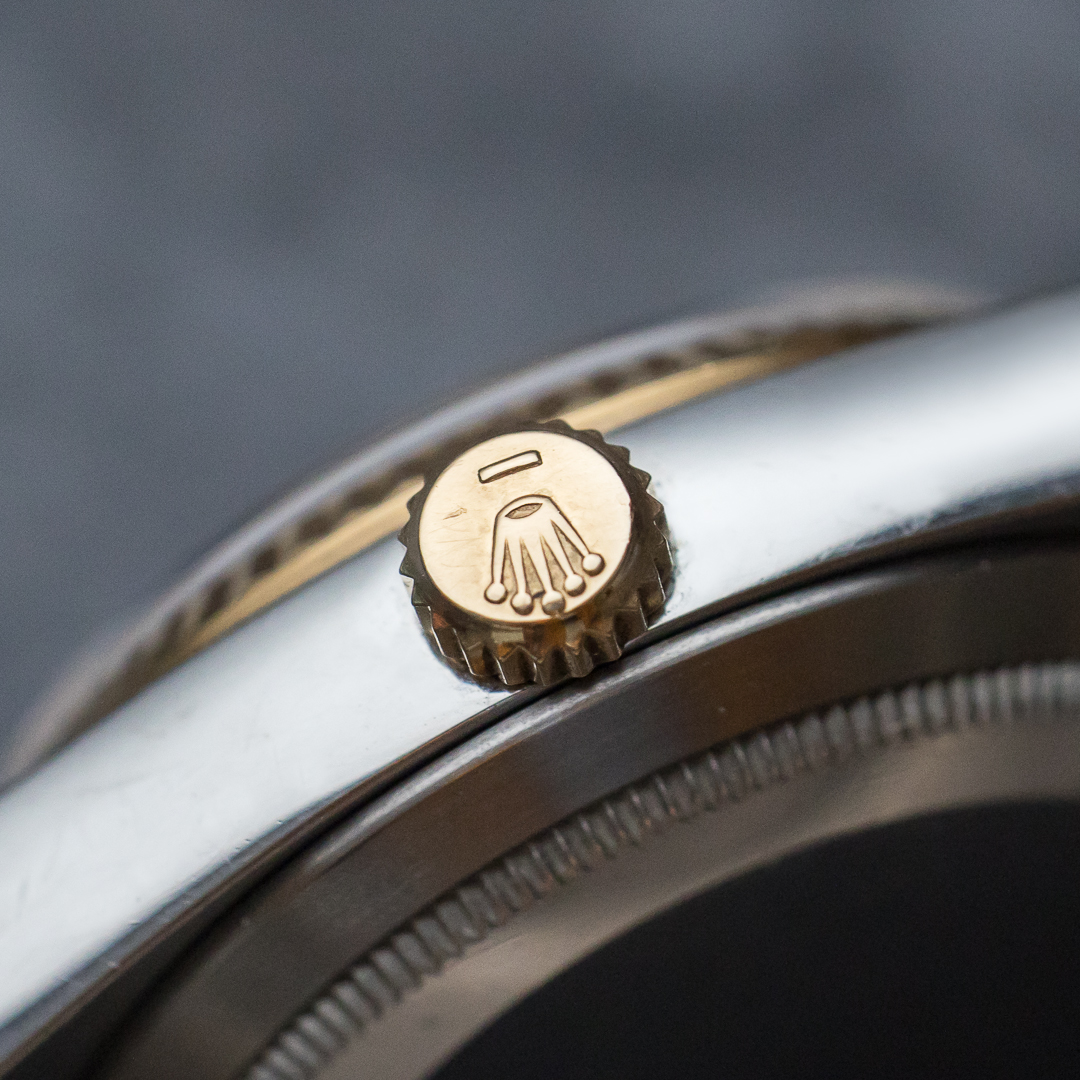
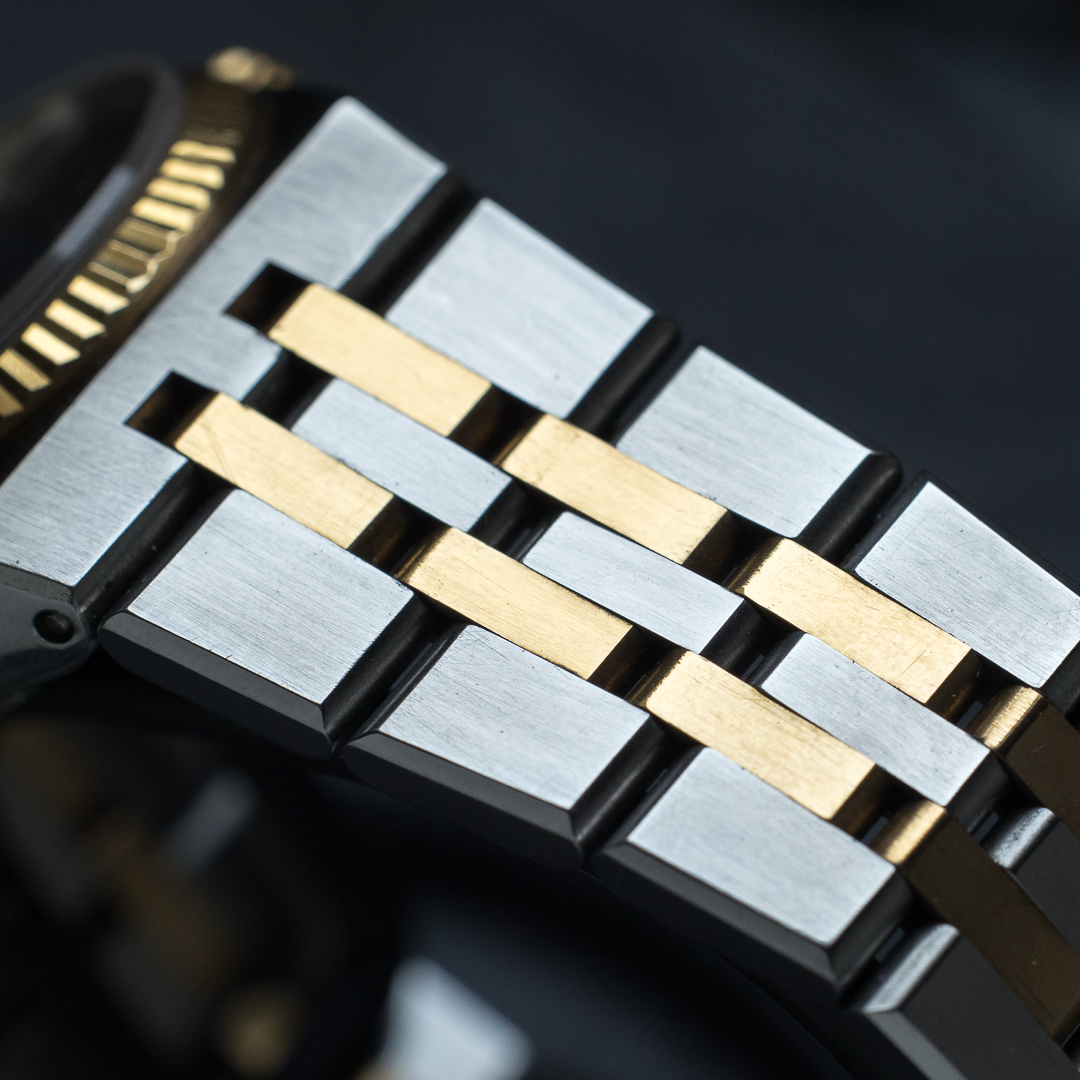
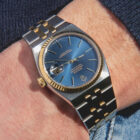
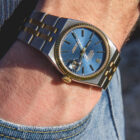
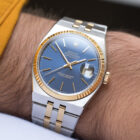
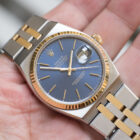
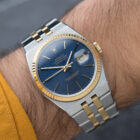
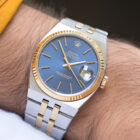
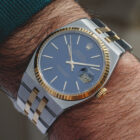
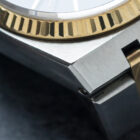
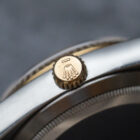
The 17013 is the most special of the three: a case and bracelet in stainless steel and 18ct yellow gold, a combination that lends the watch a sense of understated elegance despite the touches of gold. In our view, it is one of the most successful two-tone watches in history. The sharp, slab-sided case and the way the bracelet locks into the case are pure 1970s Genta DNA, a design language that produced, in the same decade, the Royal Oak and the Nautilus. With an estimated total production of around 25,000 to 50,000 units across 25 years, the Oysterquartz remains the rarest mass-produced Rolex model ever made. The calibre 5035 at its heart is, as usual with Rolex, one of the most solid movements of its category, and unexpectedly a rather well decorated caliber.
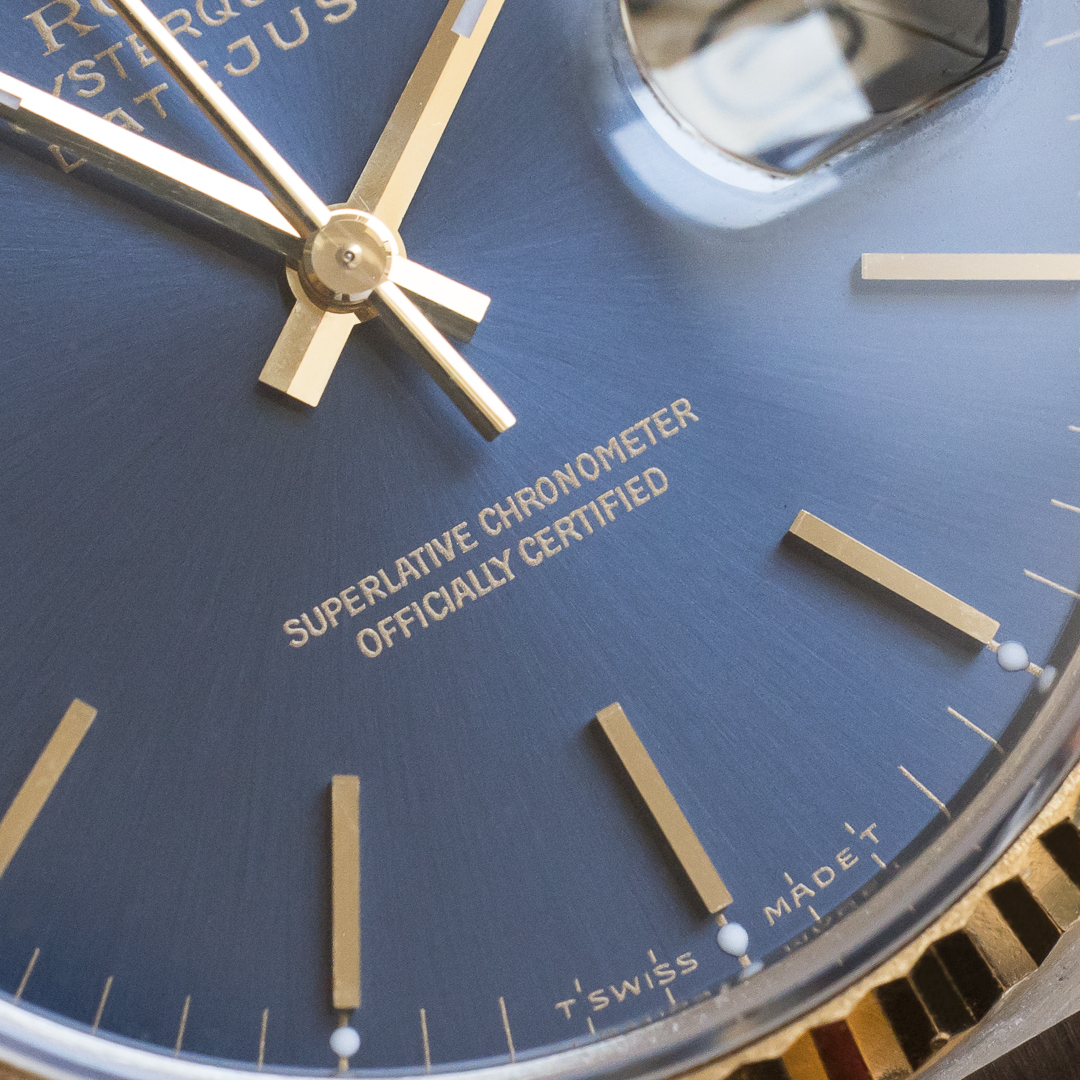
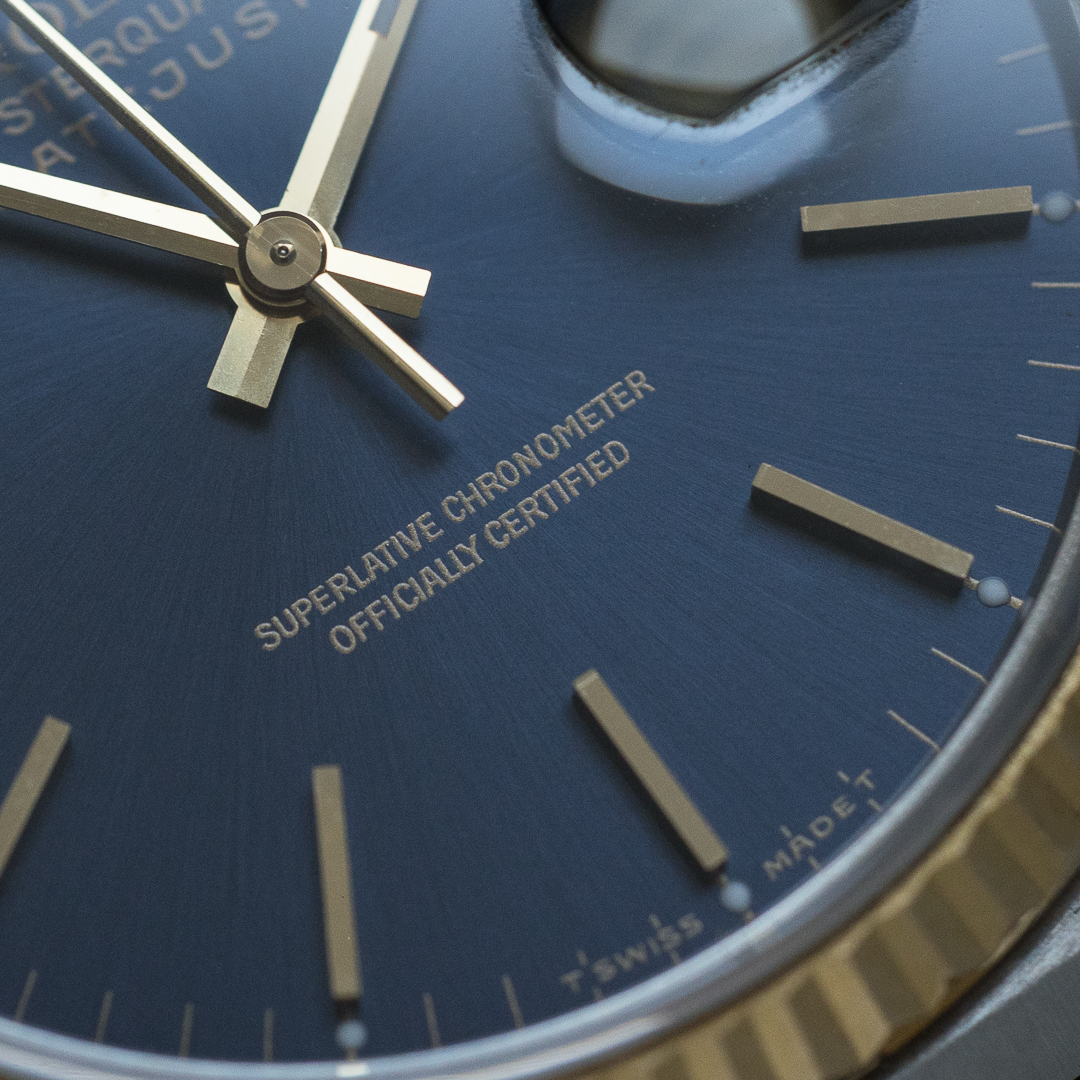
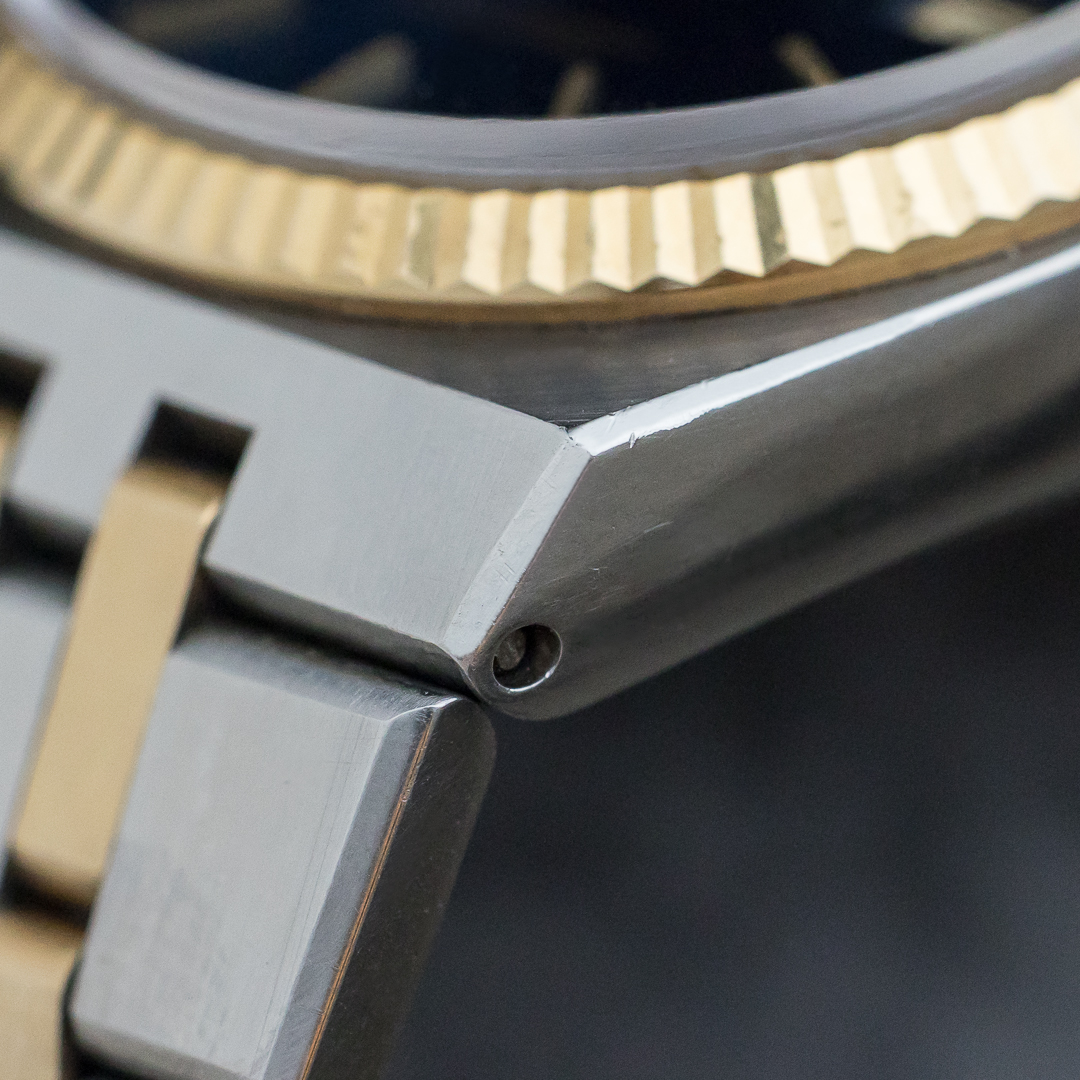
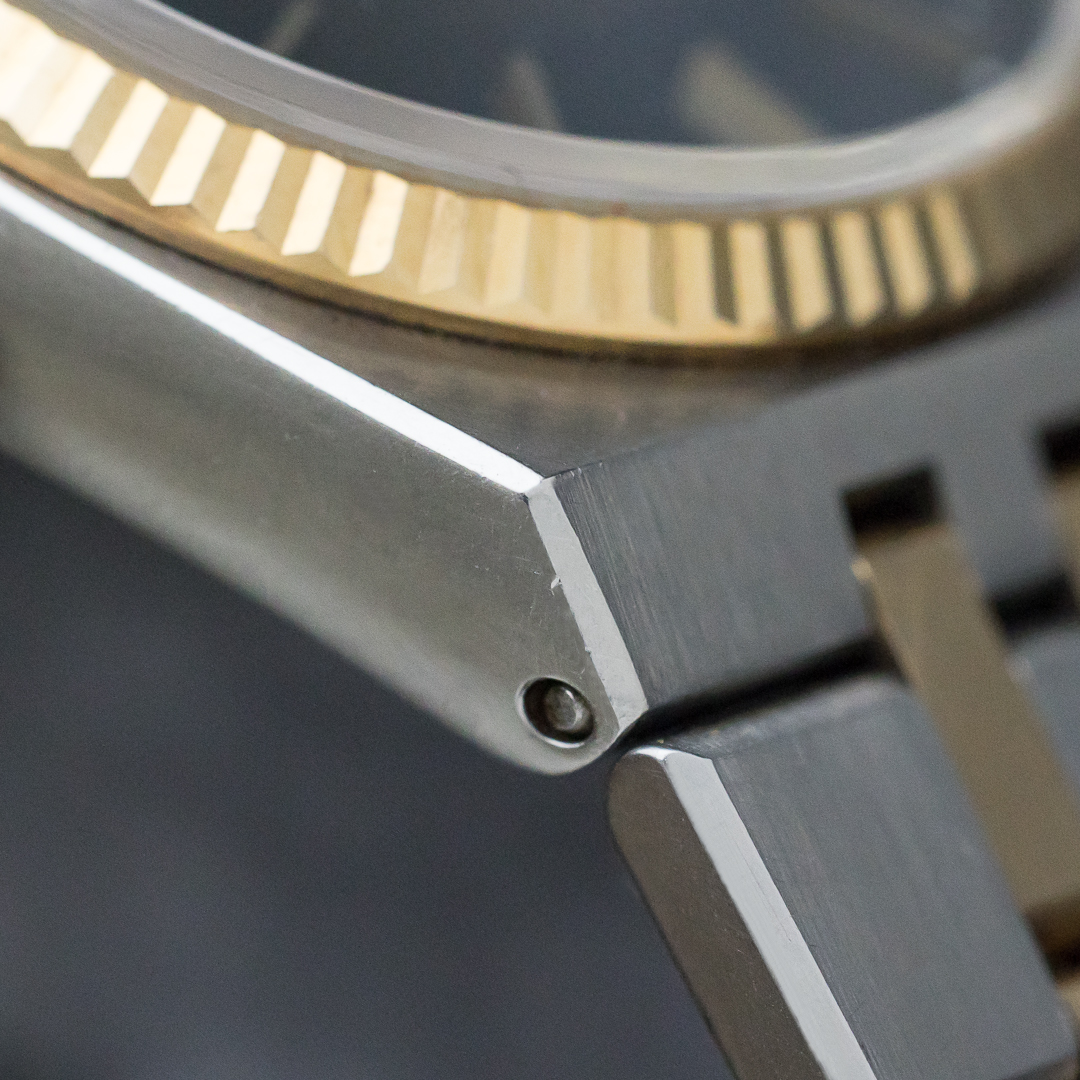
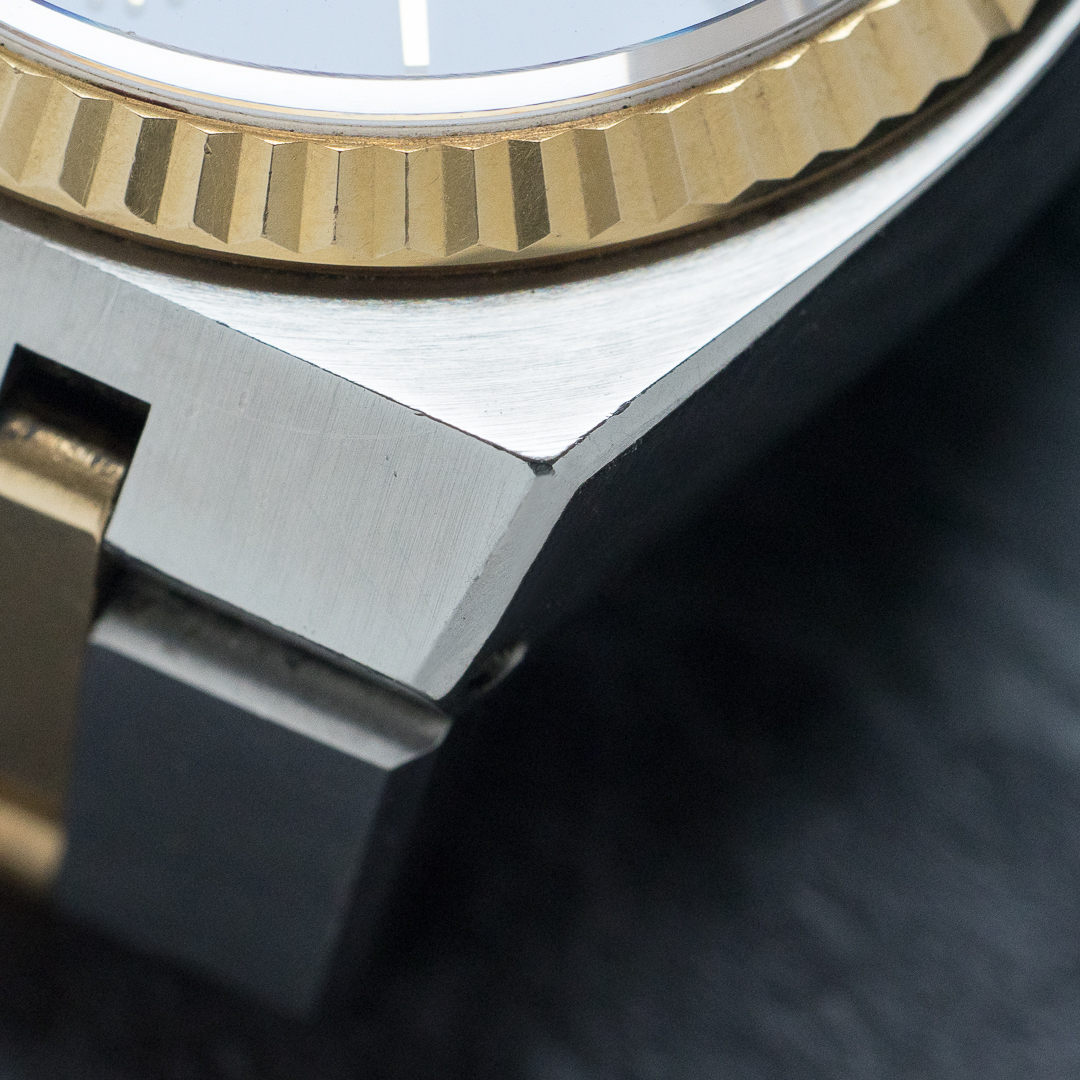
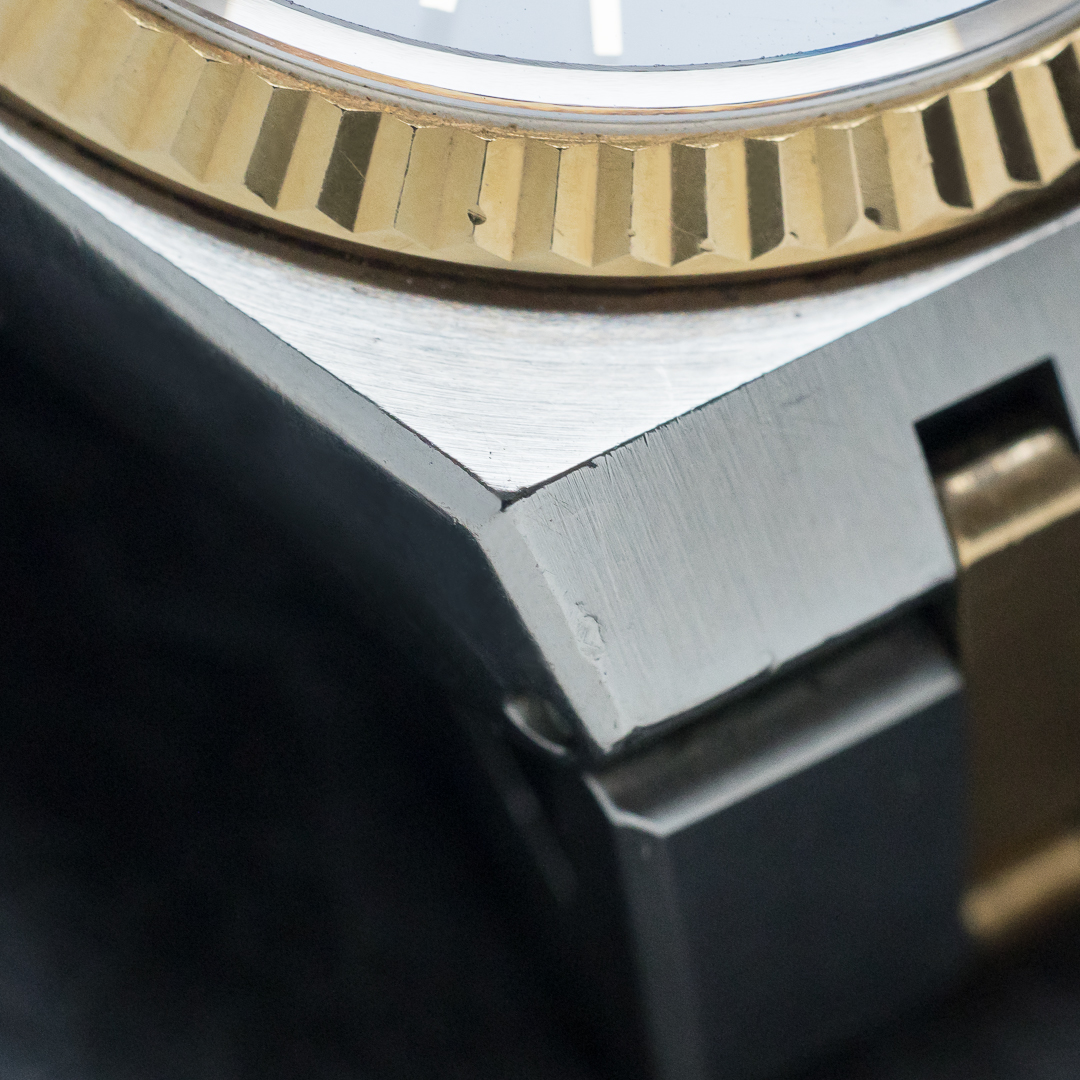
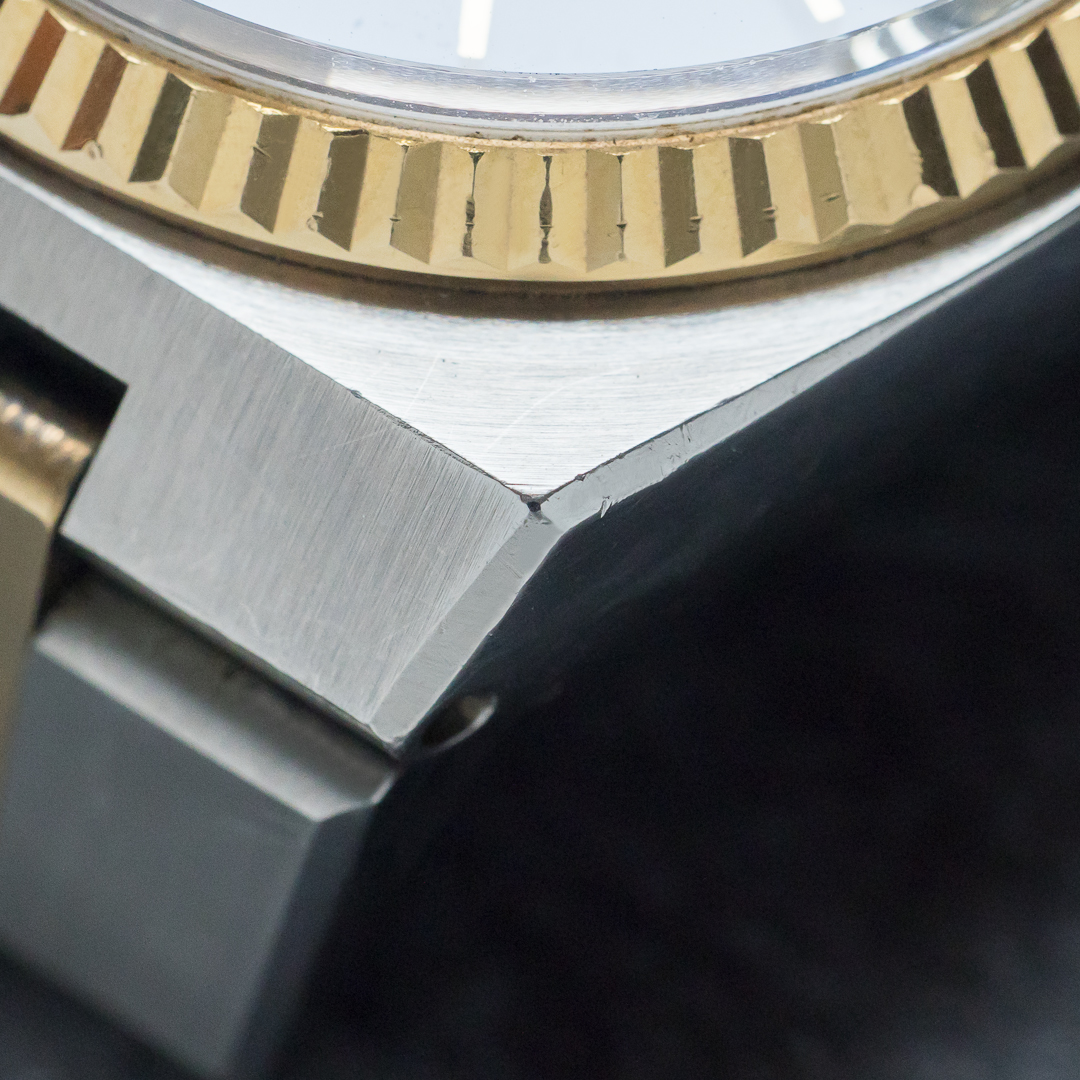
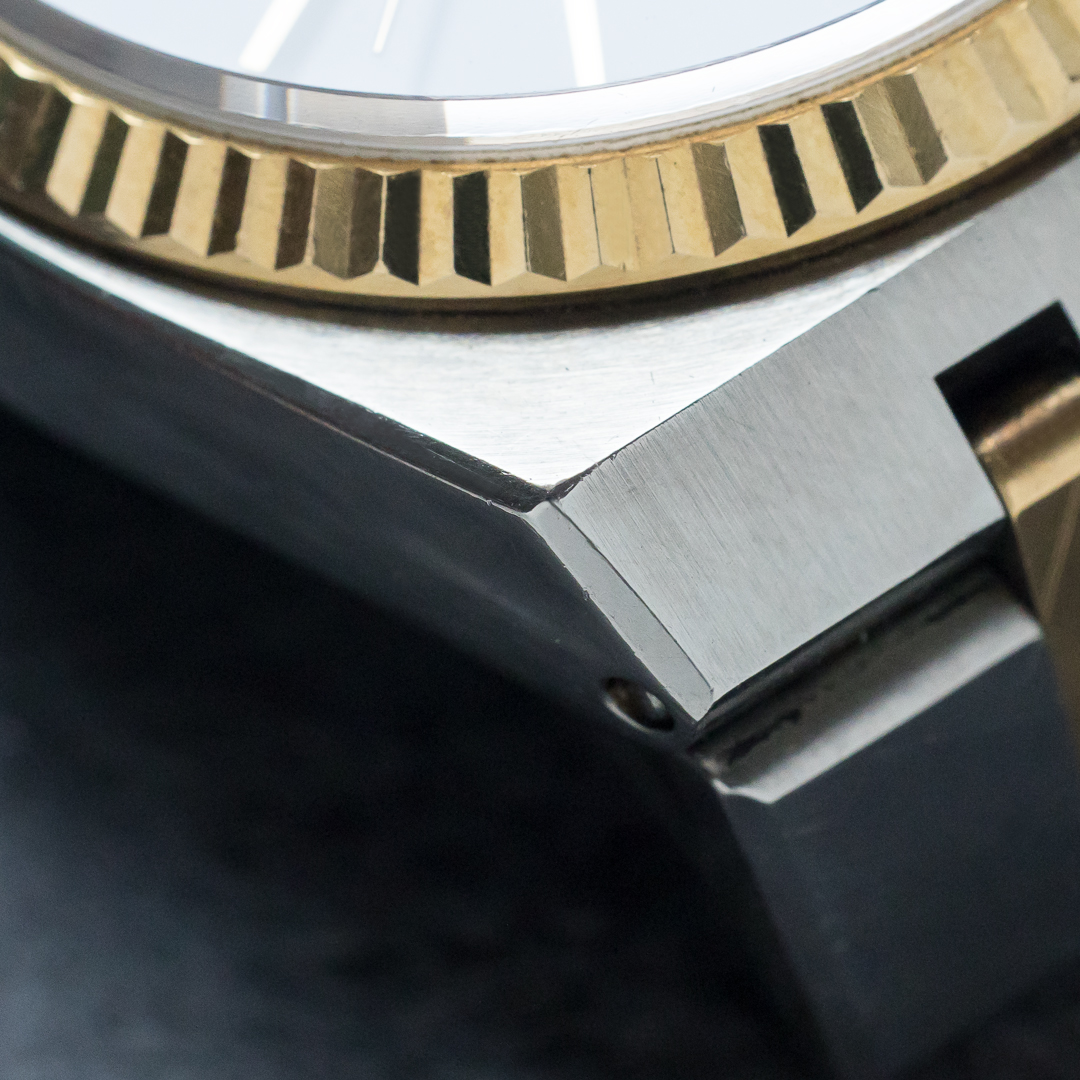
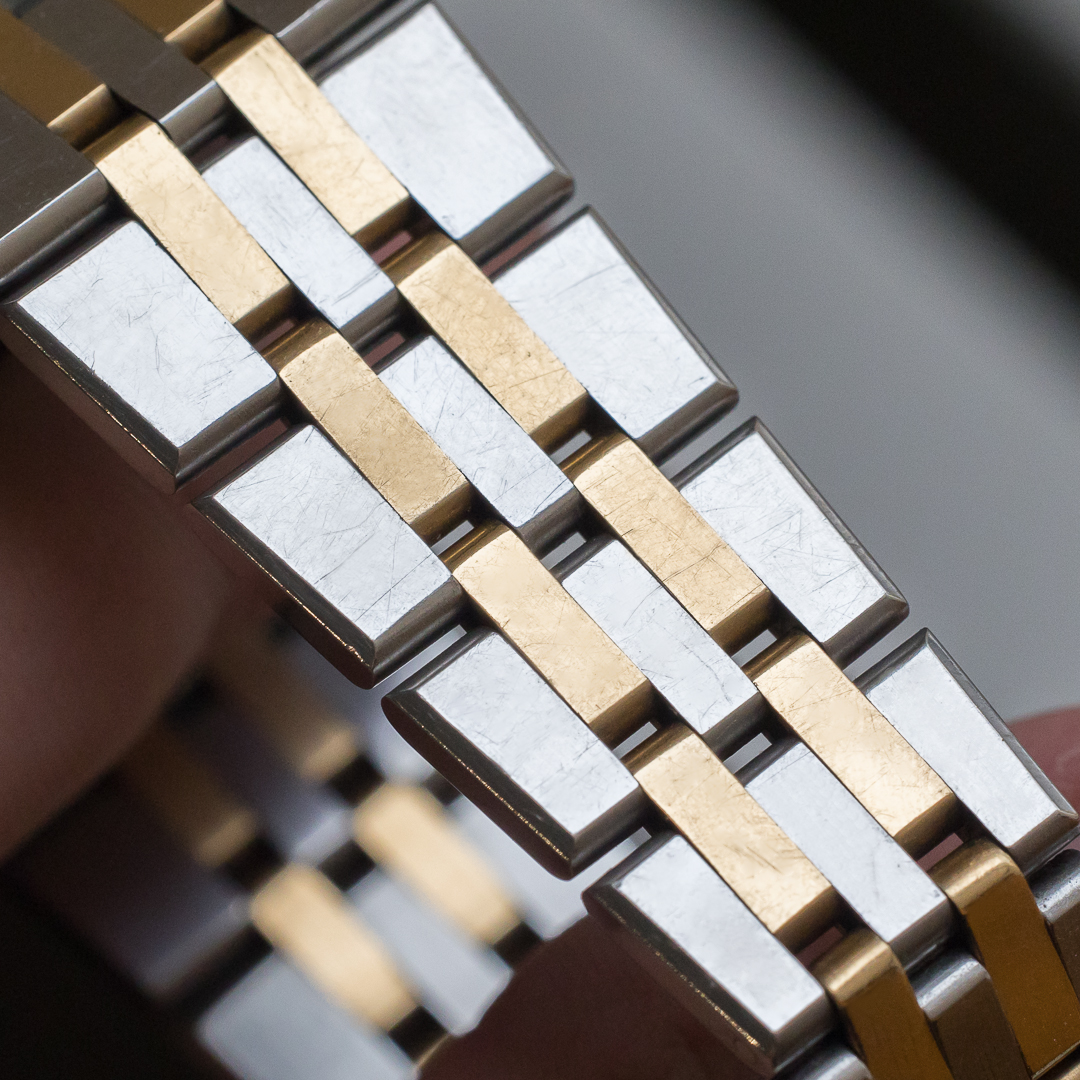
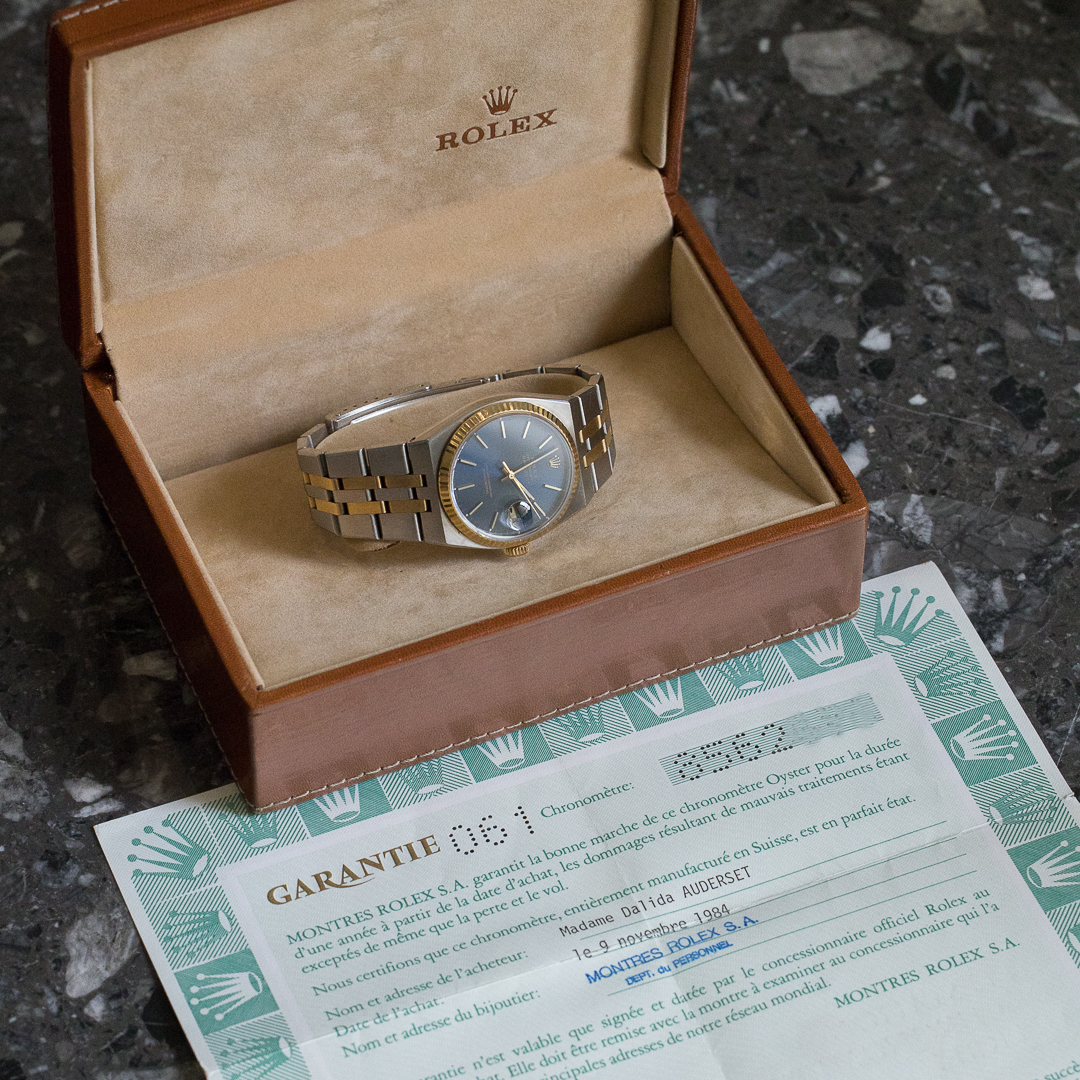
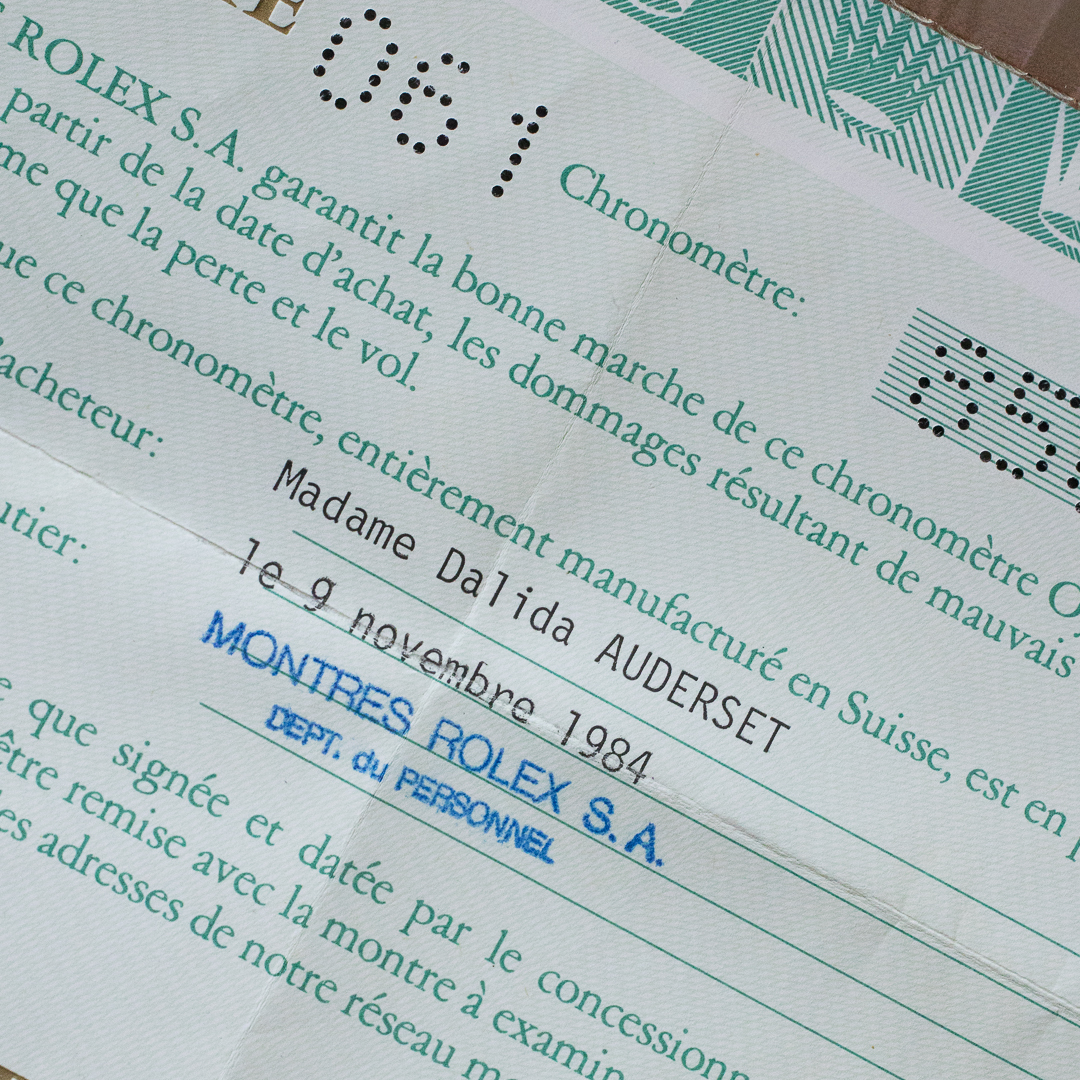
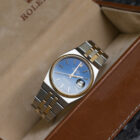
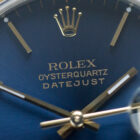
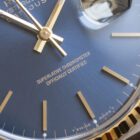
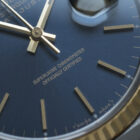
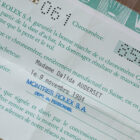
This specific example is exceptional on every count. Sold in 1984, it bears the dealer code 061, which is the internal Rolex designation for watches sold directly at the Plan-les-Ouates manufacture. It comes directly from its first and only owner, a retired employee from Rolex, making its provenance unique. The blue dial is among the rarest configurations for this reference. The case and bracelet are entirely unpolished, preserving every original bevel, edge and surface finish exactly as Rolex delivered it over forty years ago. Finding a well-preserved 17013 with a blue dial is difficult, but one in such condition, never polished and coming directly from the Rolex factory, is almost impossible to find. This piece represents a unique opportunity to acquire a highly collectable watch. There are probably few, if any, better examples of the 17013.
Case & bracelet
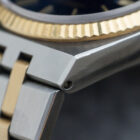
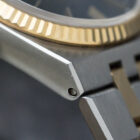
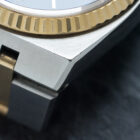
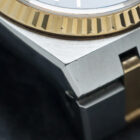
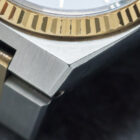
The case appears to be unpolished, it has kept sharp edges. The bezel is unpolished.
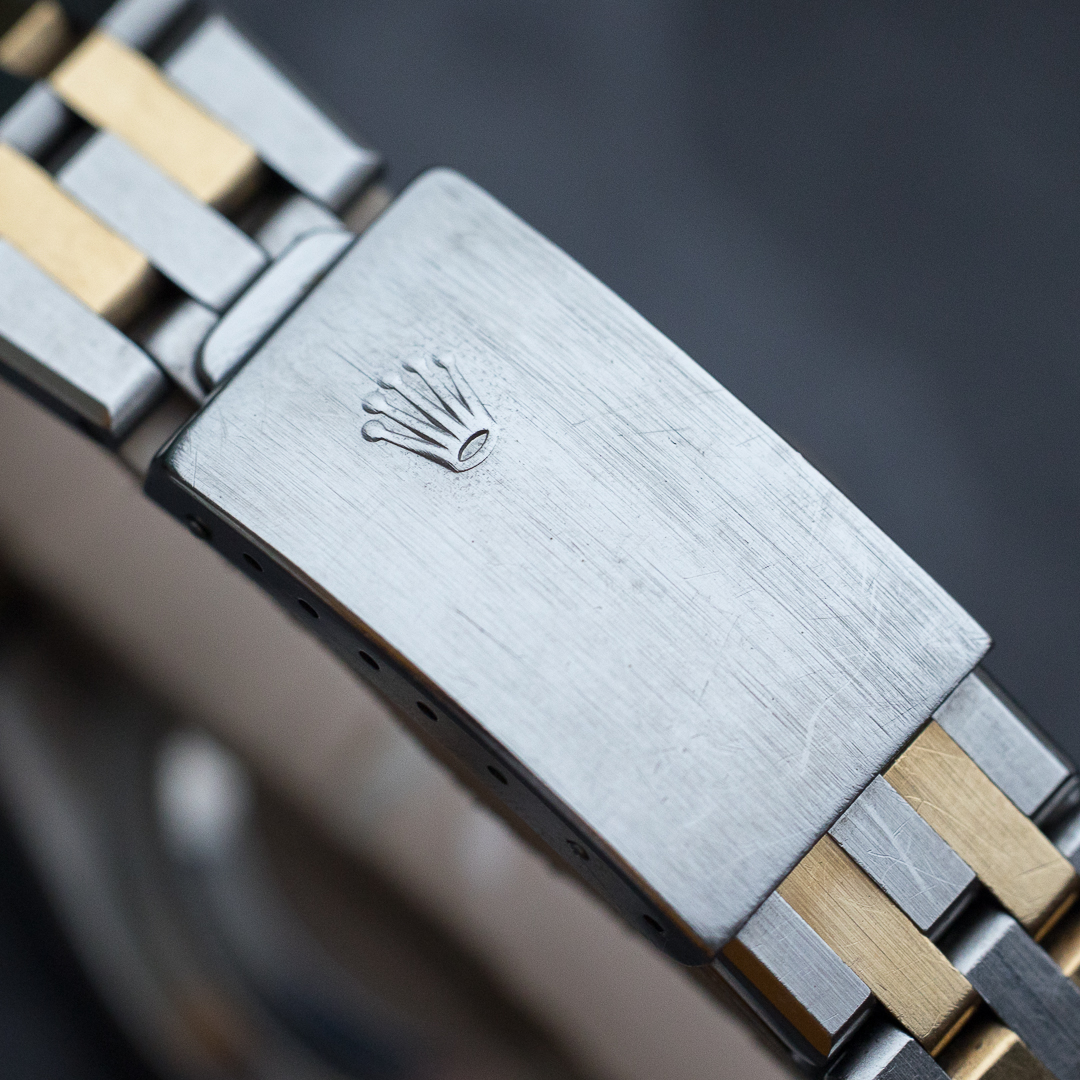
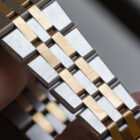
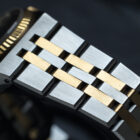
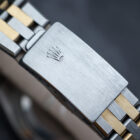
The bracelet appears to be unpolished as well and the buckle may have had s light refresh once but nothing certain. The bracelet is the original one. It has no stretch.
Accessories & extras
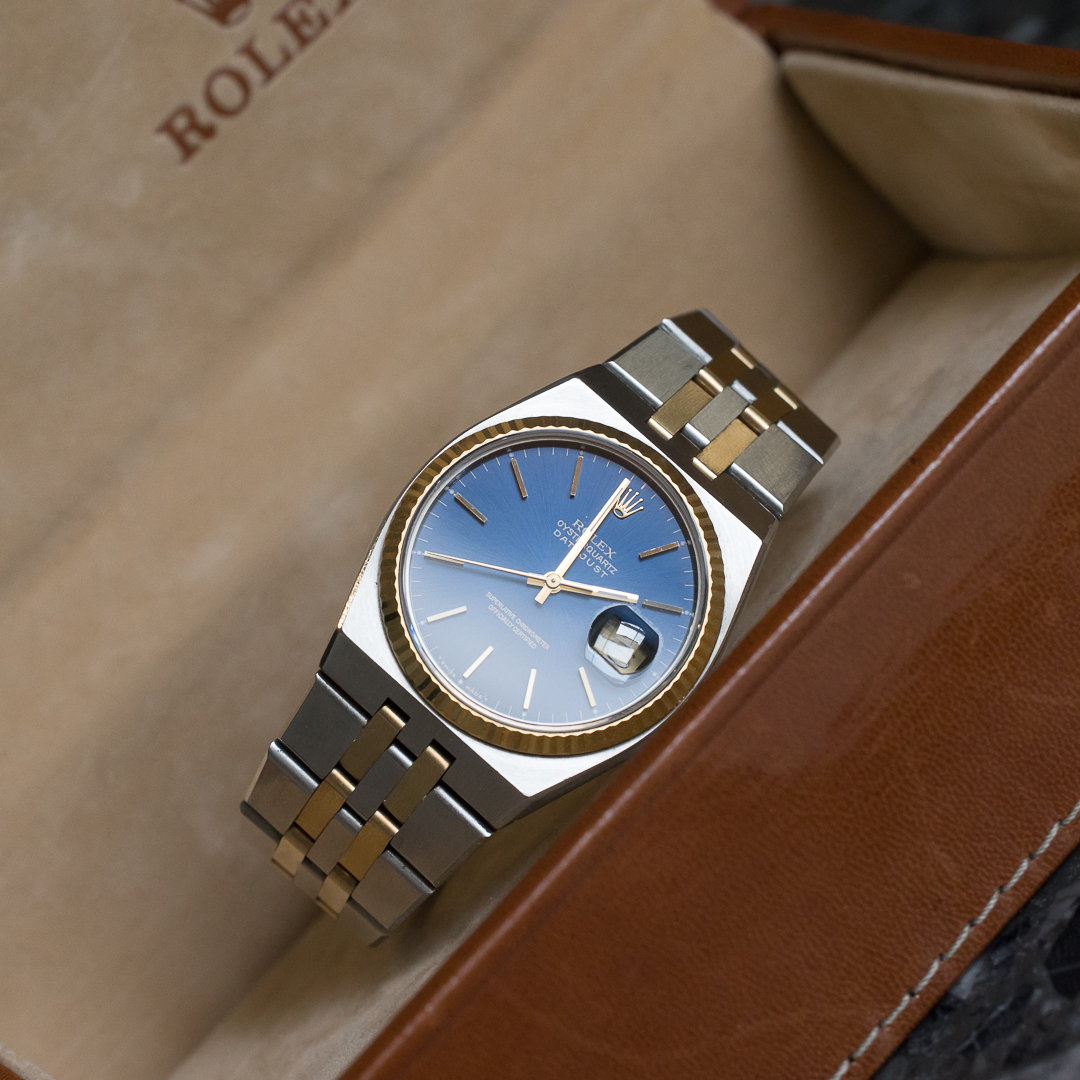
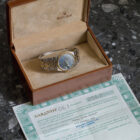
The watch is sold with its original box and papers. It was sold in 1984 at the Plan-les-Ouates Rolex manufacture, directly to one of its employee.
Movement information
The movement is the original caliber 5035.
In-person viewing
Our watches can be viewed in person in Lausanne, by appointment only. Although we do occasionally travel to meet clients in Geneva, Zurich or Bern, Lausanne remains the most convenient meeting place. Unfortunately, it is not possible to arrange visits outside Switzerland. To make an appointment, you can click on ‘Request information’ or contact us via WhatsApp.